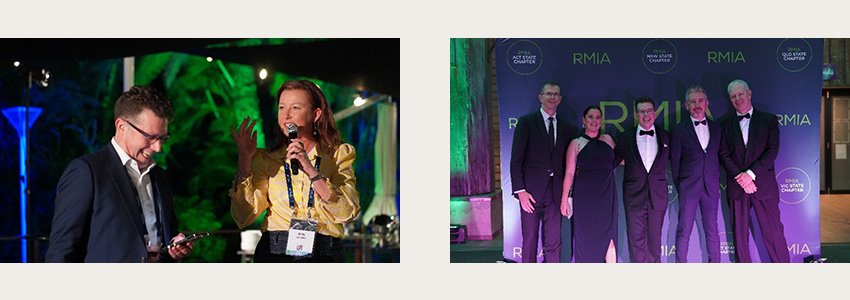
Five Years of Leadership: Simon’s Journey as RMIA CEO
March 1st marked five years for Simon as CEO of the Risk Management Institute of Australasia.
Five years that, in many ways, have reshaped the organisation. Five years that have strengthened the profession. And five years that have demonstrated what modern risk leadership truly looks like.
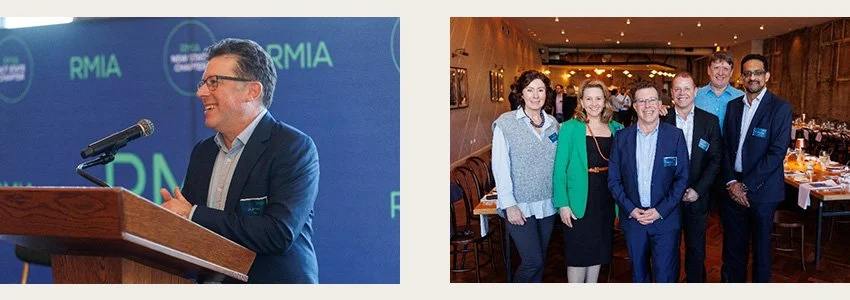
When Simon stepped into the role in 2021, the risk landscape was already shifting. What followed tested organisations, leaders and communities in ways few could have anticipated. Through it all, Simon brought a leadership style that is equal parts strategic clarity and human connection.
Reflecting on his first few months as CEO, Simon says the defining feature was the tension between stability and change.
"What stands out most when I look back at 2021 is that stability and change had to happen at the same time, in the middle of COVID-19, with fatigue really starting to set in.
We had to keep the fundamentals steady, member service, governance, delivery, while also beginning the work of modernising RMIA and sharpening our relevance. There wasn’t the luxury of doing one, then the other.
In that context, RMIA’s role became even more critical. When people were stretched, isolated and running on empty, the Institute needed to be a constant source of connection and community. Not noise. Not activity for activity’s sake. A reliable place where risk professionals could learn, share and feel part of something bigger than what was happening in their own organisation.
That’s what I remember most: the responsibility to keep RMIA steady, while moving it forward, when people needed it most."
From day one, Simon has been clear about one thing: RMIA exists to elevate the risk profession.
Under his leadership, RMIA has strengthened its voice, expanded its professional development offerings, modernised its brand presence and deepened engagement across chapters and corporate partners. The organisation has grown in influence, credibility and ambition.
But perhaps most importantly, Simon has consistently championed better decision-making. Not risk management as compliance or control, but risk leadership as a driver of strategy, culture and performance.
Leadership under pressure
When asked about the most defining challenges of the past five years, Simon reflects on two enduring lessons.
"The first is the reality that vision and delivery do not always move at the same speed.
We have a clear vision, but delivery moves at the pace of capability, capacity, governance and change fatigue. Leadership is about the discipline of staying consistent when outcomes are lagging.
People don’t always follow the plan. They follow steadiness. Over time, credibility is built by small, repeated acts of delivery, not big declarations."
The second challenge has been the expanding nature of the role itself.
"The role expands. The complexity doesn’t stop. The inbox never ends. Sustainable leadership is self-management. You protect time, build routines and model boundaries. You can’t lead a system calmly if your own system is constantly in overdrive.
The deeper lesson for me is this: I’ve become less attached to being right, and more attached to being useful. Intensity has been traded for consistency. The most strategic thing you can do is build trust through clear decisions, steady delivery and how you treat people when it’s hard."
Milestones that matter
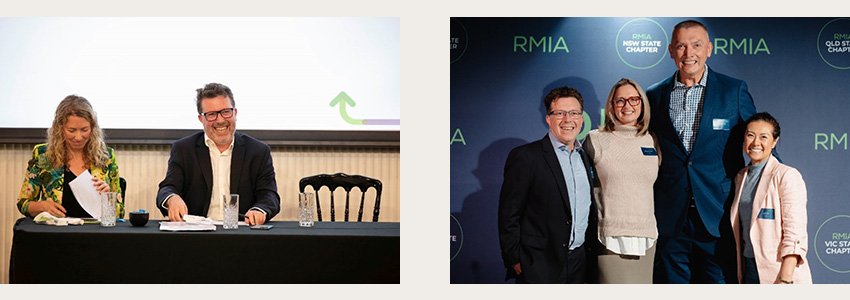
Over the past five years, RMIA has achieved significant milestones, including:
Strengthening the national conference into a flagship event for the profession
Expanding professional development pathways and training partnerships
Deepening cross-chapter collaboration and mentoring programs
Elevating thought leadership through research, blogs and industry commentary
Building stronger engagement with boards and C-suite professionals
Each milestone reflects Simon’s belief that RMIA should not only support risk professionals but actively elevate their influence.
Of all these achievements, however, Simon is most proud of something less visible.
"I’m most proud that we’ve turned ambition into delivery, and delivery into trust.
RMIA only exists because our members and volunteers choose to back us. They don’t just pay a fee. They give up evenings, weekends, headspace and a fair bit of patience, because they believe the profession is worth building and that RMIA is worth backing.
That choice is the highest form of trust.
Over the past five years, what I’m proudest of is that we’ve earned more of it by doing the unglamorous work consistently. Saying what we’re going to do, then following through. Improving the experience bit by bit. Delivering the big moments when it counts and being reliable in between.
Trust isn’t something you can ask for. It’s something you build through behaviour. And I don’t take it lightly. Every time a member renews, every time a volunteer puts their hand up again, they’re telling us, ‘Keep going. We’re with you.’ That’s the achievement I’m most proud of, because it’s the one that matters most."
The evolution of risk leadership
The profession itself has evolved significantly since 2021.
“Risk leaders in Australia and New Zealand have moved from being advisers on risk to being enterprise connectors who help organisations stay resilient under real pressure.
Operational resilience has become the proving ground. It’s no longer just about identifying risks and tracking controls. It’s about whether the organisation can keep delivering critical services when systems fail, third parties break, incidents escalate, or the environment shifts fast.
That’s why risk leaders are spending more time in the operational engine room: mapping what matters most, setting tolerances, stress testing scenarios, tightening supplier oversight and making sure incident response works in practice.
At the same time, the role has become far more horizontal. The best risk leaders now connect strategy to operations, and culture to decision-making. They translate across functions. They create clarity when trade-offs are messy. And they help leaders act earlier, not just report later.
In short, risk leadership has become less about frameworks and more about organisational performance when it counts.”
Congratulations, Simon, on five years of leadership. The momentum is only building.