
Reflections from RMIA Risk Award Winner, Kate Gannon
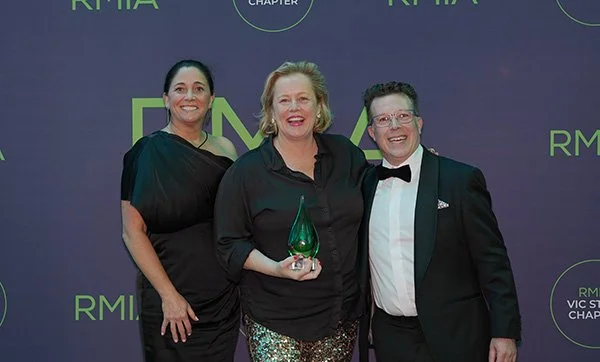
As we look forward to the 2026 RMIA Risk Awards, we are pleased to share the reflections of Kate Gannon, RMIA’s 2025 Risk Consultant of the Year.
Congratulations on winning RMIA’s Risk Consultant of the Year! Can you tell us about the project or client engagement that earned you this recognition?
Thank you — it’s an incredible honour. I share it with the small, sharp team at August Advisory who help make the work possible every day. We’re four years in now, and the recognition reflects a body of work, not a single project.
Over the past year, I’ve supported organisations like the Royal Flying Doctor Service Queensland, Mission Australia, Envest Group, and The Mutual Bank to rebuild risk frameworks so they actually get used — frameworks that help people make better decisions, not just tick compliance boxes.
They are all great clients, but by way of example, I will pick out the RFDS project. We simplified a complex, multi-regulated risk environment and built a framework that aligns directly with their mission and strategy. The moment the executive team started using risk conversations to prioritise and problem-solve, you could see the shift — risk became a leadership tool, not an audit exercise.
What unique approach or philosophy do you bring to risk consulting that sets you apart?
I believe risk should strengthen performance, not slow it down. My approach is human-centred — connecting risk to real decisions, leadership behaviours, and culture. I strip away jargon and make frameworks practical and usable.
Clients tell me my style blends strategic insight with empathy — helping leaders see risk as part of how they think, lead, and communicate. I focus on creating confidence: when people understand risk, they act with greater clarity and purpose.
What challenges did you encounter during this engagement, and how did you navigate them?
At Mission Australia, where I’ve been acting as a strategic risk partner for over three years, the challenge was how to get the whole organisation thinking differently about risk — knowing the risk team was already stretched, caught in heavy reporting cycles and weighed down by process, without the right tools to really drive value.
We shifted the focus to building a flow of information between the Executive and the Board that created the right conversations. Clear language, clear accountabilities, and a rhythm that kept the conversation moving. Once that cadence was in place, the whole system started to breathe again — people could see where risk was adding clarity, not complexity.
How do you build trust and alignment with clients when addressing complex risk issues?
Trust is built through partnership — by showing up, listening carefully, and keeping things practical. We do have playbooks, but they’re never “one size fits all.” They’re shaped to start where the client is, and moulded to help them get to where they need to go.
I start by understanding how things really work, not just how they’re documented. That creates space for honesty. We use plain language and design processes that give clients ownership, not dependency. When executives see that small changes — like a sharper Board report or a clear accountability map — lift decision quality, trust builds fast. From there, alignment follows naturally.
What innovations or methodologies did you use that proved most effective?
The most powerful innovation has been ResilienceSOS® — our system for helping leaders “get” risk. We’ve seen time and again that unless leaders truly understand how risk supports performance, any investment in frameworks, systems or reports will fall short. They end up filled with half the facts decision-makers actually need.
ResilienceSOS focuses on human connection and clarity. At Mission Australia, leadership workshops using these simple frameworks helped teams lean into empathy and outcome-based conversations, rather than diving straight into process. It’s about helping leaders talk about risk in ways that move people and decisions forward.
How do you measure success in your consulting projects, beyond deliverables or outcomes?
We measure success by the impact on the people inside the organisations we work with.
It’s the Board member who says, “That report helped us have a great discussion about risks we thought existed but had never seen before in reporting.” Or the risk team member who says, “Thank you — we couldn’t get our system to do that before, and now it’s working.”
It’s the shoulders dropping, smiles appearing, and conversations flowing again. And of course, I also look for the signs that last — when executives start using risk language naturally, when risk shows up in strategic meetings, and when frontline leaders can explain how it links to purpose. That’s when I know it’s working.
Has this recognition changed how you approach your consulting work or client relationships?
It’s reaffirmed my commitment to helping all leaders — not just risk ones — understand and own risk. In such a complex, interconnected world, that understanding is essential for personal and organisational resilience.
This recognition has given me more opportunities to work with leadership teams earlier in their journey — helping them see risk not as a separate discipline, but as part of how they lead, decide, and adapt.
What emerging risks or industry trends are most shaping your consulting work today?
Operational resilience is front and centre — CPS 230 has put it in the spotlight for the financial services world, but it’s far more than a compliance exercise. And it’s a strategic imperative for all organisations.
We’re also leaning into the interplay between AI and human connection — understanding how technology can enhance decision-making without replacing the human intuition and empathy that make those decisions sustainable.
What advice would you share with consultants looking to deepen their impact in the risk space?
Know your craft, but don’t hide behind it. Frameworks might look familiar, but the businesses you walk into never are. Listen deeply — make sure you truly understand the people, culture, and context before you deliver your “final draft.”
Clients can feel the difference when you’ve really heard them. Translate what they tell you into action they can own. And remember: trust beats templates every time. Impact happens when people believe you understand their world and can help them move forward with confidence.
How do you see the role of the risk consultant evolving in the next few years?
Risk consultants will become translators between systems, people, and strategy. As technology automates more of the data and compliance work, our real value will come from sense-making — helping leaders see patterns, ask better questions, and act decisively.
AI will be a huge enabler of productivity — until it stops us from connecting. Staying human is the differentiator. The consultants who can bring people together, build understanding, and strengthen trust will be the ones who keep organisations resilient, creative, and contributing their best — for their teams, and ultimately for the customers and communities they serve.