
Reflections from RMIA Risk Award Winner, Rodney Young
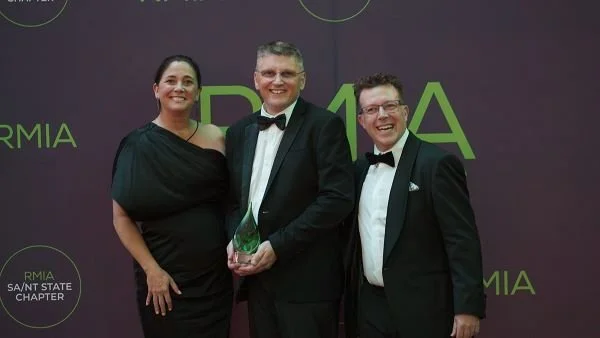
As we look forward to the 2026 RMIA Risk Awards, we are pleased to share the reflections of Rodney Young, RMIA’s 2025 APAC Risk Leader of the Year.
1. Congratulations on being recognised as the APAC Risk Leader of the Year! What does this achievement mean to you personally and professionally?
Winning APAC Risk Leader of the Year is both humbling and energising. Personally, it’s a reminder that you don’t have to choose between being practical and being bold in this profession, you can design better ways of doing risk and still stay grounded in real-world outcomes. Professionally, it validates the work we’ve been doing to move beyond risk registers and heat maps and instead connect risk directly to objectives, people, and decisions. For me, this award is less about a title and more about a platform. It is a chance to amplify conversations about modern, objective-centric risk management, ethical leadership, and capability building across the region. It has also sharpened my responsibility to invest in others through mentoring, sharing tools, and nominating future leaders who are challenging the status quo in constructive ways.
2. Can you tell us about the initiative, strategy, or body of work that earned you this recognition?
The recognition is largely built on a transformation journey where we are shifting risk at Gallagher from a compliance function to a strategic partner in decision-making. At the centre is Achieva, our objective-centric risk management framework. Instead of starting with a list of generic risks, we start with “What must go right?” for a strategy or initiative to succeed and then explore how uncertainty could affect that. We paired this with practical tools such as rapid risk assessments for projects, M&A, procurement, and travel. We also implemented pre-mortem analysis and built AI-enabled risk support. Furthermore, we implemented a Board and Executive reporting model that ties risk directly to performance and accountability. None of this sits on the shelf, it’s used in real decisions every week. What I’m most proud of is not the framework itself, but the cultural shift behind it. I am now beginning to see leaders owning risk, teams asking better questions, and people seeing risk management as something that helps them succeed, not slows them down.
3. How has this recognition shaped your outlook on leadership in risk?
This award has reinforced my belief that risk leadership today is less about being the smartest person in the room and more about being the one who creates clarity, confidence, and connection. It’s confirmed that our role is to translate complexity into choices leaders can act on, to hold the tension between opportunity and protection, and to build cultures where speaking up about risk is normal. It has also pushed me to think more regionally, such as “How can what we’ve built be shared, adapted, and stress-tested across APAC?” I feel a stronger obligation to give back through mentoring, open sharing of tools and methods, and championing others for recognition. If my work is seen as impactful, then part of my job now is to make sure many more voices, from diverse markets and backgrounds, are brought into the conversation.
4. What advice would you offer to other leaders striving to influence risk outcomes across multiple markets?
Start by ditching the idea that risk is something you “do to” the business. Co-create it. Sit with people in their context and ask what success looks like for them, then help them see how risk thinking strengthens that success. Keep your frameworks simple, principles-based, and aligned to ISO 31000, but leave room for local nuance. Invest heavily in relationships and storytelling as real examples beats policy slides every time. Use data and technology, but don’t hide behind them, as your credibility comes from being present in tough conversations. And finally, develop others. The real mark of a risk leader is not the framework you wrote, rather it’s the number of people you’ve equipped to ask better questions long after you’ve left the room.
5. Looking ahead, what excites you most about the future of risk management in the Asia-Pacific region?
APAC is one of the most complex, dynamic regions in the world and that’s exactly what makes the future of risk here so exciting. We’re dealing with shifting geopolitics, climate pressures, AI disruption, supply chain volatility, social expectations all at once. But we’re also seeing incredible innovation, youthful populations, and organisations willing to rethink old models. I’m excited about three things: 1) the move toward objective-centric and outcome-focused risk, 2) the intelligent use of AI and data to augment human judgement (not replace it), and 3) the growing culture of collaboration across borders and professions. If we harness those well, with humility, ethics, and curiosity, risk management in APAC won’t just be about protecting downside, it will be a strategic engine for sustainable growth and resilience. That’s the journey I want to keep contributing to.